

How to Market a Non-Medical Home Care Agency in 2026
A plain-English guide to marketing a non-medical home care agency in 2026: local SEO, Google, Facebook, reviews, referrals and fast follow-up.
The Ideaor team · Oct 4, 2026 · 13 min read
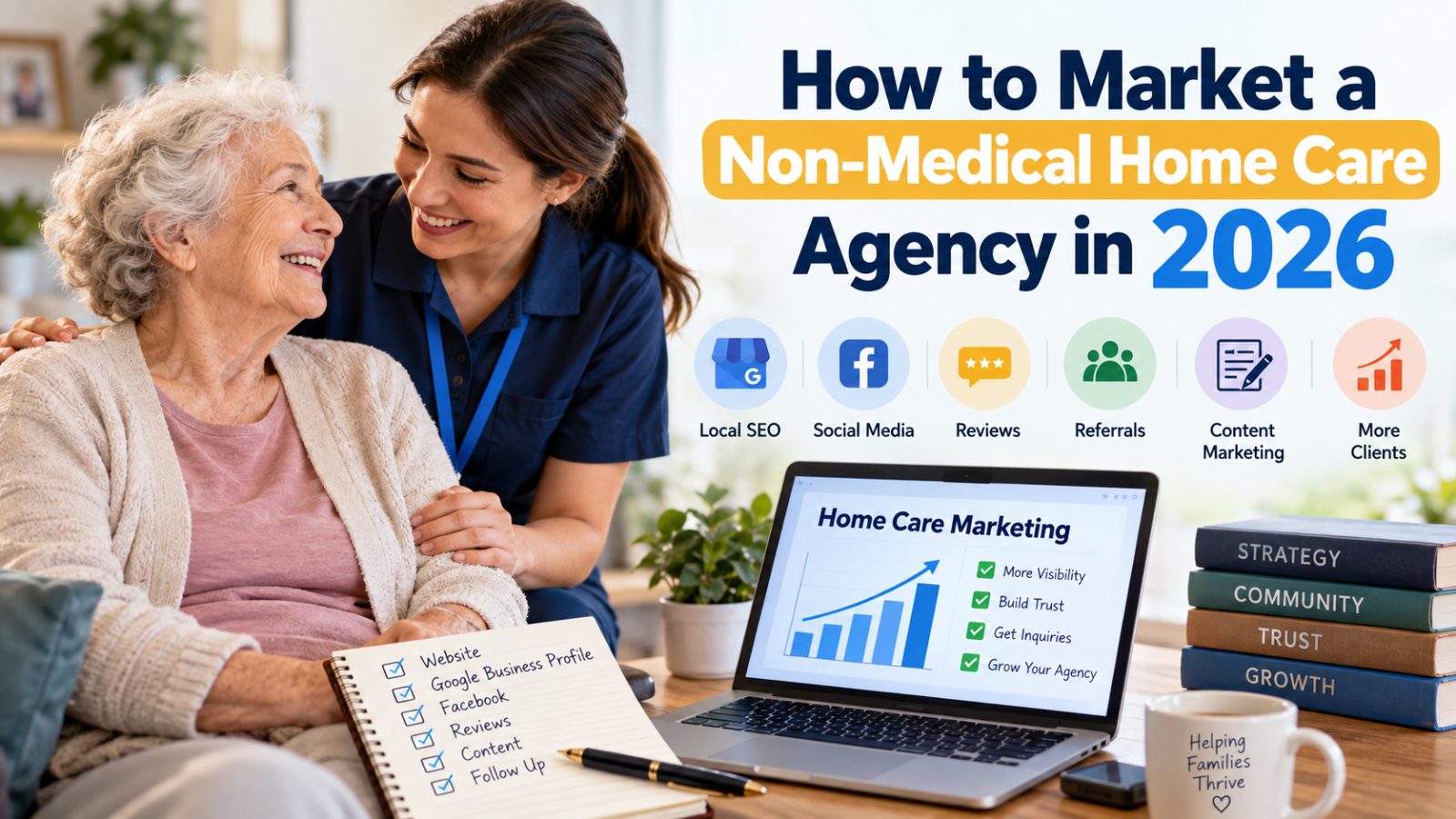
Running a great home care agency and growing one are two different jobs.
You can have kind caregivers, happy clients and a spotless reputation, and still go weeks without a new call. Usually that isn't a care problem. It's a visibility problem. The families who need you can't find you, or they find you and can't tell why they should choose you over the agency down the road.
This guide covers what actually works for marketing a non-medical home care agency in 2026: local search, Google, Facebook, reviews, referrals, helpful content and fast follow-up. No jargon and no huge budget. Just the steps, in the order we'd take them.
Why home care marketing is different
Most local businesses sell something people can compare in a few minutes. You don't.
You're asking a family to trust you with someone they love. They're often stressed, short on time and making this decision for the very first time.
Before a daughter calls about her dad, she'll probably look at your website, scroll through your Facebook Page, read your reviews and check where you work. Quietly, she's asking herself:
- Who are you, and what kind of care do you provide?
- Do you work in our area?
- Who do you usually help?
- What is it actually like to work with you?
- Can we trust you?
- What do we do next?
Good home care marketing answers those questions before anyone has to ask them.
1. Make it obvious where you work
Families want someone local. They aren't searching for a national brand. They're searching for help near Mom's house.
So your website should say, clearly and early on:
- The towns and neighborhoods you serve
- The non-medical care you offer, such as companion care, personal care and respite care
- Who your care is for
- How to reach you
- What makes you different
- What happens after someone gets in touch
If you serve Dallas, say "home care in Dallas and nearby communities" somewhere people will actually see it, not just in the footer.
Location pages can help too, as long as each one is genuinely useful. Twenty copies of the same page with the city name swapped won't fool Google, and they won't help a worried family either. The goal is simple: the right local family should know right away that you serve them.
2. Set up your Google Business Profile properly
When someone searches "home care near me", your Google Business Profile is often the first thing they see. It deserves real attention.
Make sure it has:
- Your exact business name
- Your address or service area
- Your phone number and website
- Your opening hours
- The right business category
- A clear, specific description
- The services you offer
- Recent, real photos
Then keep it alive. Update your hours over the holidays, add new photos now and then, and reply to reviews.
A word about photos: stock images of smiling strangers don't build trust. Your real team, your office and your community events do. When someone finds you on Google, they should feel they're looking at a real local business with real people behind it.
3. Use Facebook to be known, not just to advertise
For most home care agencies, Facebook is the social platform worth showing up on every week. Your local community is there, and so are the adult children who make most care decisions.
The common mistake is treating your Page like a flyer board. If every post says "We provide quality home care. Call today!", people learn to scroll straight past.
Instead, post things a family would actually want to see.
Caregiver and team stories
Introduce a caregiver and share why they chose this work. Celebrate a work anniversary or a training someone just finished.
Helpful tips
- Signs an aging parent may need more support
- Simple ways to help seniors stay socially connected
- Questions to ask when choosing a caregiver
- How family caregivers can avoid burnout
Your community
Did your team take part in a local event, host a senior activity or support a local charity? Show it.
Client moments, with permission
With clear permission, and with privacy fully respected, a happy moment with a client shows the human side of your work.
Not every post has to sell. The goal is that when a family finally needs help, your name already feels familiar.
4. Answer the questions families are already asking
Picture a daughter typing "how do I know if my mom needs in-home care?" late at night. If your website has a clear, kind answer waiting for her, you've just met a future client.
Good topics to write about:
- What is non-medical home care?
- How does in-home care work?
- What does a home caregiver actually do?
- Home care vs. assisted living
- Home care vs. home health care
- How much does in-home care cost?
- How to choose a home care agency
- Questions to ask a home care agency
- What is respite care?
Answer the question properly first. Don't turn every article into a sales pitch. At the end, give readers an easy way to reach you if they need help.
Over the months, helpful articles bring in steady search traffic and introduce your agency long before a family is ready to decide.
5. Ask happy families for reviews
Choosing care is a trust decision, and reviews are trust people can see. If two agencies offer the same services and one has thirty thoughtful local reviews while the other has three, the first one usually gets the call.
A few ground rules:
- Never buy reviews or write fake ones.
- Ask genuinely happy clients and families, at a natural moment.
- Make it easy by sending them the direct link.
- Thank people for kind reviews.
- Reply calmly and professionally to complaints, and never argue in public.
A strong review profile isn't built in a weekend. It's built one real experience at a time, so start asking now.
6. Build referral relationships in your community
Not all marketing happens online. Plenty of families find care through someone they already trust.
Depending on your area and the rules where you work, good relationships might include:
- Senior living communities
- Elder law attorneys
- Financial advisors who work with older adults
- Senior centers and community groups
- Caregiver support organizations
- Other local businesses that serve seniors
Don't walk in asking for referrals. Get to know people first. Learn what they do and who they help, and look for ways to be useful to them. Referral partnerships grow on trust, just like your client relationships do.
7. Turn your website into your best salesperson
A pretty website isn't enough. It needs to help a worried family member figure out what to do next.
Within a few seconds of landing on your homepage, a visitor should know:
- What you do. For example: non-medical home care that helps older adults stay safe and comfortable at home.
- Where you do it. List your service area plainly.
- Why they can trust you. Your experience, your caregivers, your reviews and your approach.
- What to do next. Call, book a free consultation or send a message.
Put your phone number where people can see it. Keep your contact form easy to find. And swap vague lines like "we are committed to compassionate excellence" for specifics that show what that really means.
8. Reply fast when someone reaches out
Getting an inquiry is the start, not the finish line.
A family that finally asks for help is often contacting two or three agencies at once. If your reply arrives the next afternoon, someone else may already be booking the first visit.
Set up a simple follow-up routine:
- Acknowledge the message right away.
- Ask what kind of help they need.
- Learn the location and the general situation.
- Check that you're a good fit.
- Offer a call or a consultation.
- Make sure a named person on your team follows up.
Automation can handle the first, repetitive part, like a quick, friendly reply on Facebook Messenger at 10 p.m. It shouldn't replace the human conversation. Its job is to make sure no real inquiry gets lost in an inbox.
9. Stay in touch with families who aren't ready yet
Not every family is ready to start care the day they contact you. "We're still talking it over with my brother" doesn't mean no. It means not yet.
With their permission, keep in touch by email and send things that are genuinely useful:
- Caregiving tips
- Helpful guides for family caregivers
- News from your agency
- Local events
Skip the constant sales emails. The goal is to stay helpful and familiar, so that when they're ready, yours is the first name they remember.
10. Show the people behind your agency
Home care is personal, so your marketing should feel personal too.
Introduce your caregivers and your office team. Share why your agency exists and what you believe good care looks like. Celebrate your milestones.
A family doesn't only want to know what services you offer. They want to know who will be walking through Mom's front door. Your content can start answering that before the first phone call.
11. Post on a schedule you can actually keep
You don't need to post every day. Being consistent matters far more than posting a lot.
A small agency could start with three posts a week:
- Monday: a helpful tip for family caregivers
- Wednesday: a caregiver or team spotlight
- Friday: a community, educational or service post
That's more than 150 chances a year to stay in front of local families.
Coming up with one good post is easy. Keeping it going month after month is the hard part. A content calendar, plus a little help from automation, makes a big difference.
12. Track what's working
Marketing gets much easier when you stop guessing. Keep an eye on:
- Website visitors and contact form submissions
- Phone calls and Messenger conversations
- Facebook reach and engagement
- Consultations booked
- Where each new client first heard about you
- New reviews
You don't need an analytics team. Start with one question: where do our best inquiries come from? Then do more of that.
Think of it as a simple loop: create, measure, learn, improve.
What about paid ads?
Paid ads can work for home care agencies. We just wouldn't start there.
If your website doesn't build trust, your Google profile is half finished, your Facebook Page looks quiet and nobody replies to messages quickly, more traffic won't fix it. You'd be paying to send families somewhere that isn't ready for them.
Build the foundation first. Then test ads with a small budget and see what they bring in.
Common home care marketing mistakes
- Only posting promotions. "Call us today" on repeat teaches people to ignore you.
- Trying to be on every platform. You don't need Facebook, Instagram, TikTok, LinkedIn and YouTube all at once. Start where your families are.
- Ignoring reviews. Good reviews take time, so start asking early.
- An outdated website. Old photos, old services or a broken contact form cost you calls.
- Slow replies. A lead that waits too long calls someone else.
- Fake reviews or bought followers. Shortcuts can damage a reputation you spent years building.
- Generic AI content. Publishing piles of bland articles nobody finds helpful isn't a strategy.
- Doing everything by hand. Your team's time belongs with clients and relationships, not with repetitive tasks a tool can handle.
A simple 90-day home care marketing plan
Starting from scratch? Don't try everything at once. Here's a plan that fits around a busy week.
Month 1: Get the basics right
- Tidy up your website and make your service area clear
- Complete your Google Business Profile
- Set up a simple way to ask for reviews
- Make your Facebook Page look active and trustworthy
Month 2: Start showing up
- Post three useful things on Facebook each week
- Publish your first helpful articles answering family questions
- Introduce your caregivers and team
Month 3: Build your lead system
- Capture every inquiry in one place
- Reply quickly, every time
- Check fit and book consultations
- Follow up with families who aren't ready yet
- Start tracking where inquiries come from
After that: keep what works
Look at the numbers. Drop what isn't helping, and put more time into the channels that bring real conversations and good-fit clients.
Where AI can help, and where it shouldn't
AI is useful for the repetitive parts of marketing. It shouldn't make your agency sound like a robot.
Good uses for AI:
- Coming up with content ideas
- Drafting social posts for you to review
- Turning one idea into several posts
- Planning a content calendar
- Answering common questions after hours
- Organizing leads and reminding your team to follow up
- Summarizing conversations
But keep the human parts human. A caregiver's story should sound like that caregiver. A conversation with a worried family should feel kind. And real care decisions always need a person involved.
The best use of AI isn't replacing your agency's personality. It's giving your team more time to show it.
How Ideaor helps
Marketing is hard to keep up with when you're also managing caregivers, supporting families and running a business. The weekly Facebook post is usually the first thing to slip.
That's the problem Ideaor was built to solve. Ideaor helps non-medical home care agencies:
- Plan and write Facebook posts in your own voice, which you approve before anything goes out
- Keep a steady posting schedule with a simple content calendar
- Answer Facebook Messenger quickly, and hand the conversation to your team when it matters
- Save every inquiry as a lead, so nobody falls through the cracks
- See how your posts are performing
No more starting from a blank screen every Monday, and more time for your team to care for people. You can start free, with no card needed.
Frequently asked questions
How do I market a non-medical home care agency?
Start with the basics: a clear local website, a complete Google Business Profile, regular and helpful Facebook posts, genuine reviews, a few referral relationships and fast replies to every inquiry. You don't need to do it all at once. Begin with what matters most in your area and build from there.
What is the best marketing strategy for a home care agency?
There isn't one best strategy for every agency. For most local agencies, the strongest mix is local SEO, a well-kept Google Business Profile, real reviews, referral partners, useful content, an active Facebook Page and quick follow-up on every lead.
Is Facebook good for marketing a home care agency?
Yes. Facebook is a great way to stay visible in your community, share caregiver stories, teach families something useful and start conversations through Messenger. It works best when your posts are helpful and human rather than constant ads.
How can a home care agency get more clients?
Be easier to find, easier to trust and easier to contact. Improve your local search presence, collect honest reviews, publish helpful content, build referral relationships, keep your social pages active and reply quickly when families reach out.
How often should a home care agency post on Facebook?
There's no magic number. For a small agency, three useful posts a week is a good, realistic start. Posting consistently matters more than posting a lot.
How can AI help with home care marketing?
AI can help plan content, draft posts, answer common questions, sort early inquiries and remind your team to follow up. A person should still review what goes out and handle any conversation about care decisions or sensitive situations.
The bottom line
Marketing a home care agency in 2026 doesn't mean being everywhere. It means being easy to find where local families look, helpful when they're searching for answers and trustworthy when they're deciding who to call.
Start with the basics. Keep your website clear and your Google profile accurate. Show up on Facebook with real stories. Ask happy families for honest reviews. Build relationships in your community. And never let a good inquiry sit unanswered.
You don't need a big marketing department. You need a simple system you can keep running, and the right tools to make it easier.
Because the best home care marketing isn't about looking bigger than you are. It's about helping the right family find you, and giving them every reason to trust you.